

How to Build the Ultimate Luxury Home Entertainment Setup
A room that impresses guests before they sit down takes planning. Here is how the most considered home entertainment spaces come together — and what separates a setup that looks good from one that actually performs.
What Makes a Home Entertainment Space Truly Luxury?
Luxury is not a price point. It is the result of decisions made with intention — materials chosen for longevity, equipment selected for performance, and a layout that feels effortless rather than assembled. The homes that get this right share something in common: every element was chosen to serve a specific purpose at the highest possible level.
A premium home entertainment space in 2025 typically has three anchors. A wine storage and serving solution that protects the collection and looks the part. A draft beer system that pours with the consistency of a professional bar. And increasingly, a home golf simulator that gives serious players a way to stay sharp year-round without leaving the property.
Each of these investments, done right, functions well independently. Done together with intention, they define a room that earns its place in a high-end home.
The Wine Cooler: Where Every Entertainment Space Should Start
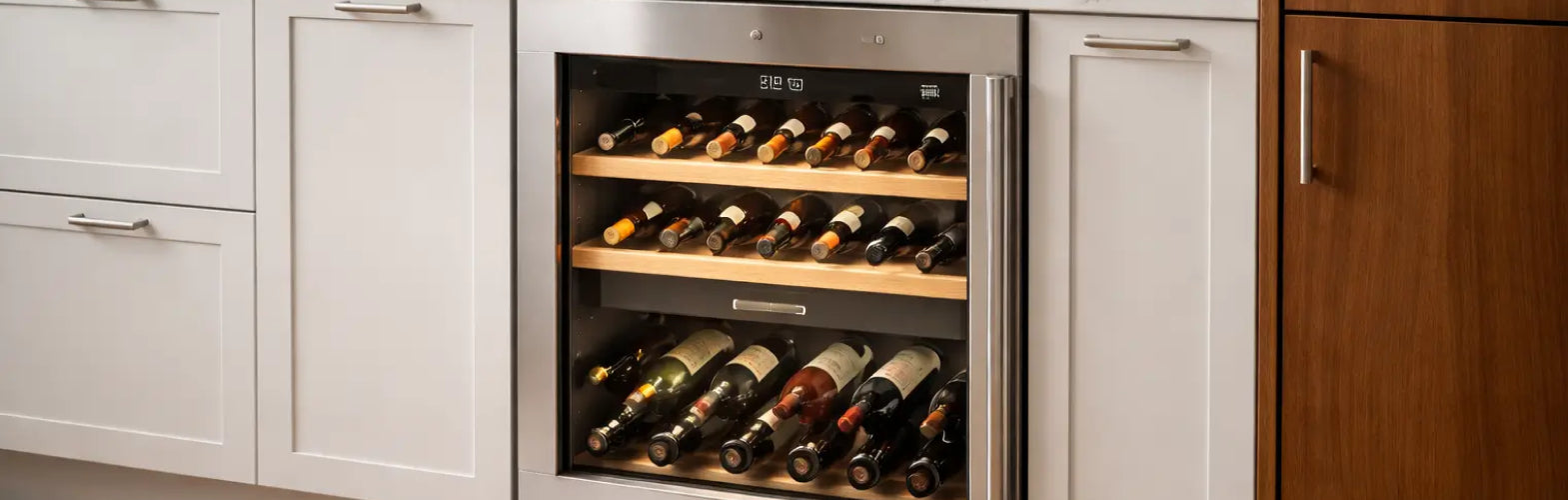
Wine is the single most common element in a luxury entertainment space, and it is also the most abused. Most homes store wine on a kitchen counter, in a pantry, or in the bottom of a standard refrigerator — none of which come close to the conditions wine needs to age correctly or taste the way the winery intended.
The optimal storage temperature for a mixed collection sits between 53°F and 57°F. A standard kitchen runs between 70°F and 78°F depending on the season. That gap — fifteen to twenty-five degrees — is the difference between wine that develops over time and wine that slowly degrades on a shelf.
What a proper luxury wine cooler does differently:
- Holds cellar temperature within a degree or two, season after season
- Maintains consistent humidity so corks stay sealed and do not dry out
- Eliminates vibration that disturbs sediment in aged reds
- Blocks UV light that breaks down wine compounds through glass doors
- Provides the quiet, dark, still environment wines need to develop correctly
A dual-zone wine refrigerator takes this a step further by letting you store reds and whites simultaneously, each at its ideal temperature, in the same unit. For a home bar or kitchen with a serious collection, this eliminates the compromise of a single-temperature setup entirely.
Key specs to evaluate before buying a luxury wine cooler:
- Bottle capacity: Size for your current collection and leave room for it to grow. Champagne, Burgundy, and large-format bottles reduce stated capacity.
- Single vs. dual zone: Single zone suits red-forward collections. Dual zone suits buyers who drink across multiple styles.
- Built-in vs. freestanding: Built-in units are front-venting and sit flush in cabinetry. Freestanding units need clearance on all sides.
- Compressor vs. thermoelectric: Compressor units hold temperature reliably across ambient conditions. Thermoelectric units run quieter but struggle in rooms above 75°F.
- Shelving material: Wood shelves protect labels and absorb minor vibration better than wire alternatives.
A well-chosen wine cooler is also furniture. The right finish — stainless steel, black stainless, or panel-ready — should complement the cabinetry around it and look like it belongs in the room rather than sitting in it.
The Home Kegerator: A Draft Bar That Earns Its Place
A good home bar solves one problem above all others: consistency. The difference between a bar that impresses every time and one that frustrates guests is almost always temperature and pressure management — the two variables a quality kegerator handles automatically.
Draft beer served from a properly configured kegerator tastes fundamentally different from the same beer poured from a bottle or can. The carbonation is in balance. The pour is controlled. The serving temperature is exact. And the experience — pulling a pint from a tap in your own home — is one that a refrigerator shelf of bottles cannot replicate.
What separates a quality kegerator from a novelty:
- Digital temperature controls that hold serving temp within one or two degrees
- Commercial-grade draft towers that minimize foam from temperature fluctuation at the tap
- Stainless steel interiors that resist odor absorption and are easy to clean between kegs
- CO₂ pressure regulation that stays stable across the full life of the keg
- Dual-tap configurations for serving two beer styles simultaneously
Choosing the right kegerator for your space:
The most important decision is built-in versus freestanding, and it comes down to ventilation. A built-in kegerator vents from the front and sits flush inside a cabinet run. A freestanding unit needs open space at the sides and rear for the compressor to exhaust heat properly. Installing a freestanding unit in a closed cabinet is the fastest way to shorten compressor life and raise serving temperature above spec.
The Home Golf Simulator: The Investment That Redefines the Spare Room
A spare room, a large garage bay, or a dedicated basement space has an obvious answer in a luxury home: a golf simulator. The category has matured significantly in recent years, and the setups available today — with proper impact screens, reinforced enclosures, and simulator flooring — are legitimate training and entertainment environments, not novelty items.
For a serious golfer, the case is straightforward. Weather removes access to the course for months in most climates. Travel removes it entirely. A home simulator eliminates both variables. The swing stays sharp. The handicap does not drift. And the room becomes one of the most-used spaces in the house rather than the least.
What a well-configured home golf simulator includes:
- An enclosure: The structural frame that defines the hitting space and contains ball impact. Width and ceiling height determine how natural the swing feels.
- An impact screen: The surface the ball strikes and the projector image appears on. Screen grade determines how long it holds up under repeated high-speed impacts.
- Simulator flooring: A turf surface underfoot that makes the setup feel like a real hitting bay and protects the floor beneath it.
- A launch monitor: The device that tracks ball speed, launch angle, spin rate, and carry distance and feeds data to the simulator software.
- A projector: Matched to the screen size and room throw distance to produce a sharp, bright image across the full surface.
Choosing the right enclosure size:
The most common mistake in a home simulator build is buying an enclosure that does not fit the room correctly. A frame that is too wide for the space crowds the backswing. A ceiling that is too low produces anxiety at the top of the swing and changes tempo. A screen that is too narrow introduces peripheral visual cues that do not exist on a real course.
Our golf simulator collection covers SIG8, SIG10, and SIG12 enclosure widths precisely because different rooms need different configurations. The right match is always based on your actual room dimensions.
SIG Series Quick Reference:
- SIG8: Suited for dedicated rooms with tighter width constraints. Ideal for focused simulator use.
- SIG10: The most versatile configuration. Fits most standard bonus rooms and garage bays comfortably.
- SIG12: Designed for larger dedicated spaces where maximum lateral clearance is the priority.
Each configuration is available as a studio bundle with flooring included, or as an enclosure-only option for buyers who source their launch monitor and projector separately.
How To Bring All Three Together In One Space
The strongest luxury entertainment rooms do not treat these three categories as separate purchases. They treat them as a single designed environment where each element was chosen to work alongside the others.
A layout that works well in most dedicated entertainment rooms:
- The wine cooler is positioned where it is visible and accessible — alongside a wet bar or built into a run of cabinetry. Its finish matches the surrounding fixtures.
- The kegerator lives in or adjacent to the bar area, with its draft tower at counter height and the tap handles visible from across the room.
- The golf simulator takes the deepest portion of the space — typically the far end of a long room or the full length of a garage bay — with the wine and bar area near the entrance where guests arrive.
This layout means the bar and wine storage are the first things a guest encounters, creating the right first impression. The simulator is the centrepiece of the room's back half, visible from the bar but separated enough to function as its own environment.
The finishing details that elevate the full setup:
- Consistent cabinet and countertop finishes across the bar and wine storage area
- Lighting that serves both ambient mood and functional task visibility at the bar
- A dedicated CO₂ line for the kegerator, separate from any brewing setup
- Acoustic panels or dark wall finishes behind the simulator screen to reduce glare
- A small seating area between the bar and the simulator where guests can watch
None of these details require a complete renovation. Most can be incorporated during the equipment installation phase with minimal additional work and significant visual impact.
The High Time Home Approach To Luxury Home Equipment
Every product in the High Time Home lineup was selected for the same reason: it performs at the level a luxury home demands. No compromises on temperature stability in the wine coolers. No shortcuts in the draft tower construction in the kegerators. No substitution of commercial-grade enclosure materials in the golf simulators.
It also means genuine support before and after purchase. We know that a wine refrigerator, a kegerator, and a golf simulator are not impulse purchases. They are decisions made by people who know what they want and expect to get exactly that.
Free freight shipping on eligible orders means the equipment arrives intact and on schedule. Warranty coverage on key components means the investment is protected. And a direct support line means there is always someone available when a question needs an answer.
Frequently Asked Questions
1. What is the best starting point for building a luxury home entertainment space?
Start with the wine cooler or kegerator before planning the golf simulator. Refrigeration units define the bar area layout and cabinet dimensions first. Once the bar footprint is set, the remaining room depth determines which simulator enclosure size works correctly. Planning in this order prevents the most common layout conflicts and ensures every piece fits without compromise.
2. How much space do I need for a home golf simulator?
A minimum of 10 feet of ceiling height, 12 to 15 feet of depth from the hitting position to the screen, and 10 feet of width gives a comfortable hitting environment for most swing styles. Tighter rooms can work with a SIG8 configuration, but ceiling height is the constraint that matters most — low ceilings alter swing mechanics and reduce the value of the setup significantly.
3. Can a wine cooler and a kegerator share the same bar area?
Yes, and this is the most common configuration in a dedicated luxury entertainment room. The key is ensuring each unit has the correct ventilation clearance for its type — front-venting for built-in units, open sides and rear for freestanding. Running both in the same cabinetry run is straightforward when the cabinet is built or modified to accommodate their specific ventilation requirements.
4. Is a home golf simulator worth it for a mid-handicap golfer, not just a low handicap?
Yes, and arguably more so. Low-handicap players use simulators for course management and swing refinement. Mid-handicap players benefit from the volume of repetition a home setup enables — hitting hundreds of shots in a session without a tee time, weather window, or range bucket limit accelerates improvement faster than course play alone. The data a good launch monitor provides on ball speed, launch angle, and spin also gives mid-handicap players insight into their misses that they would not otherwise have access to.
5. What warranty coverage do High Time Home products carry?
Warranty terms vary by product and brand. Wine coolers in the Allavino lineup carry up to 5-year compressor coverage with parts and labor protection on key components. KEGCO kegerators carry manufacturer warranty coverage on compressors and major hardware. SIG series golf enclosures carry structural warranty coverage on frame and screen materials. Our team confirms exact terms for each unit at checkout.
6. Does High Time Home offer price matching?
Yes. High Time Home offers a price matching policy for eligible products. If you find the same item at a lower price from an authorized retailer, contact our team and we will confirm whether the match applies to your order. Full details are available on the Price Matching Policy page at hightimehome.com/pages/price-matching-policy.